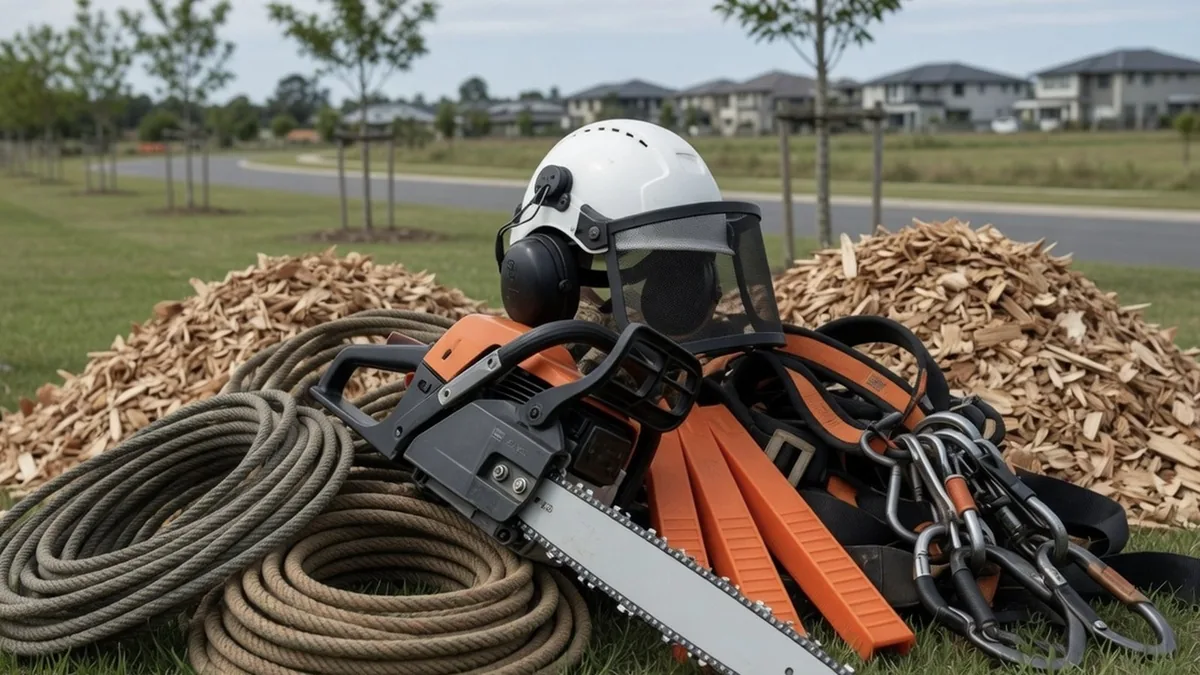
Arborist Reports & Tree Assessments
Written tree assessments and arborist reports prepared for development applications, council enquiries and pre-purchase checks across the Macarthur growth corridor.
Learn more →Assessment first, paperwork second, chainsaw last. We connect Macarthur property owners with local tree crews who understand what Council asks for before a tree comes down.
Stand on the ridge at Bradbury looking east over the Georges River gorge and you are looking at one Macarthur: deep, tangled bushland running north through Noorumba Reserve, Smiths Creek Reserve and down to the river flats at Simmos Beach Reserve in Macquarie Fields, with the Scenic Hills forming the rural backdrop out west. Drive twenty minutes north-west to Gregory Hills or Denham Court and you are in the other one: wide new streets on former Cumberland Plain farmland, where the biggest tree on the block went in with the turf.
Both need arborists. They need very different arborists.
Macarthur Tree Removal connects property owners, builders and developers right across the Campbelltown area with local tree crews and report writers — for the assessment, the paperwork and the work itself, in that order.
The single most expensive mistake made on Macarthur blocks is cutting first and asking later.
Campbelltown City Council controls vegetation work on private land through the Campbelltown (Sustainable City) Development Control Plan 2015, Part 11 — Vegetation and Wildlife Management. The DCP's definition of a tree is deliberately wide: a perennial plant with at least one self-supporting stem that is more than 3 metres in height, or has an outside circumference of at least 500mm at ground level, or a branch and foliage crown spread of at least 4 metres. Any one of those is enough.
On a 1970s block in Airds or Ingleburn, that is essentially every tree in the yard. On a fifteen-year-old block in Raby, it is most of them.
Council runs separate application pathways for private tree removal, for pruning, and for trees assessed as dead, dying or dangerous — and it charges a fee for each. The Australian Business Licence and Information Service lists Campbelltown's 2025–26 schedule at around $182 for a private tree permit and around $177 for a private tree prune of up to four trees, with an assessment fee listed for dead, dying or dangerous trees (ABLIS listing). Fees are reviewed annually and pathways change, so treat those as a guide and confirm with Council on (02) 4645 4000.
Two things worth knowing before you start:
Most of this region sits on clay soils derived from Wianamatta shale — the geology that carried Cumberland Plain Woodland, listed as a critically endangered ecological community under both NSW and Commonwealth law, with only a fraction of its original western Sydney extent left (NSW Environment and Heritage final determination).
That has practical consequences on an ordinary suburban block:
On insurance: we ask the crews we work with to carry public liability cover, and you should ask to see the certificate before anyone starts. That is a reasonable request on any job, and a crew worth having will produce it without fuss.
Across the established Campbelltown suburbs — Campbelltown, Leumeah, Bradbury, Ambarvale, Rosemeadow and Airds — the northern rail corridor at Glenfield, Macquarie Fields, Ingleburn and Minto, the 1980s western estates at Raby and Eagle Vale, and out to the growth-corridor edge at Denham Court and Gregory Hills. Suburb-by-suburb detail is on the coverage page.
If a tree is worrying you, the useful first step is not a price — it is knowing what you are actually dealing with and which approval pathway applies. That conversation is free and it usually saves money.
Call (02) 4601 3387 for a free, no-obligation assessment anywhere in the Macarthur region. If a tree has already come down on a structure, say so when you ring and it gets treated as priority. If a power line is involved, stay at least 8 metres clear and call Endeavour Energy on 131 003 first.
Written tree assessments and reports prepared to support your development application or council enquiry.
Experience clearing and managing vegetation on new estate and subdivision sites across the growth corridor.
We ask the crews we work with to carry public liability cover — ask to see the certificate before work starts.
We help you understand local tree-protection requirements and prepare the paperwork councils ask for.
Written tree assessments and arborist reports prepared for development applications, council enquiries and pre-purchase checks across the Macarthur growth corridor.
Learn more →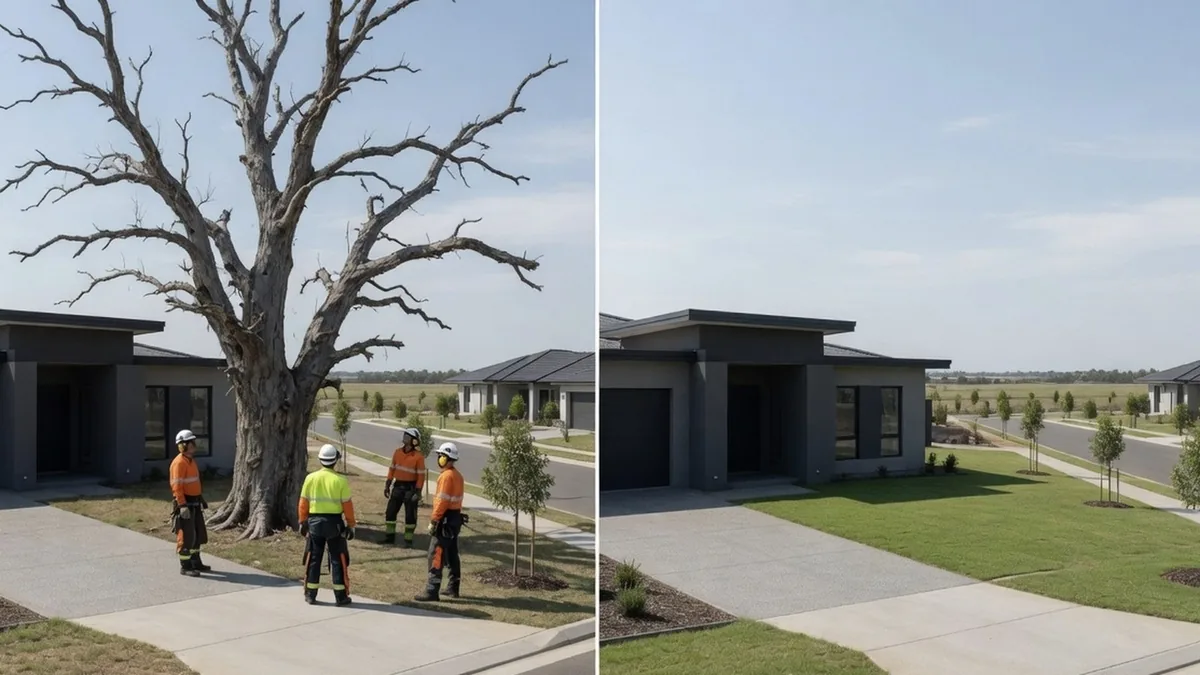
Safe removal of dead, damaged or unwanted trees from established Campbelltown-area streets and new estate blocks alike.
Learn more →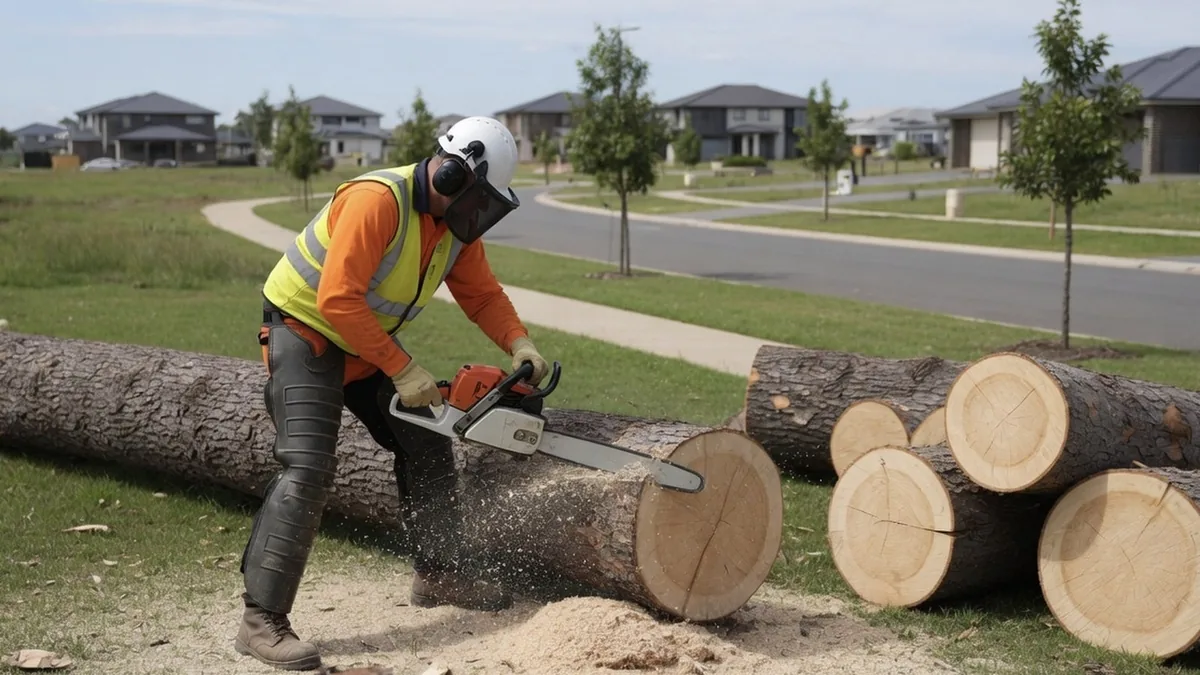
Vegetation and tree clearing for subdivisions and new-estate building sites, carried out with attention to boundary and retained trees.
Learn more →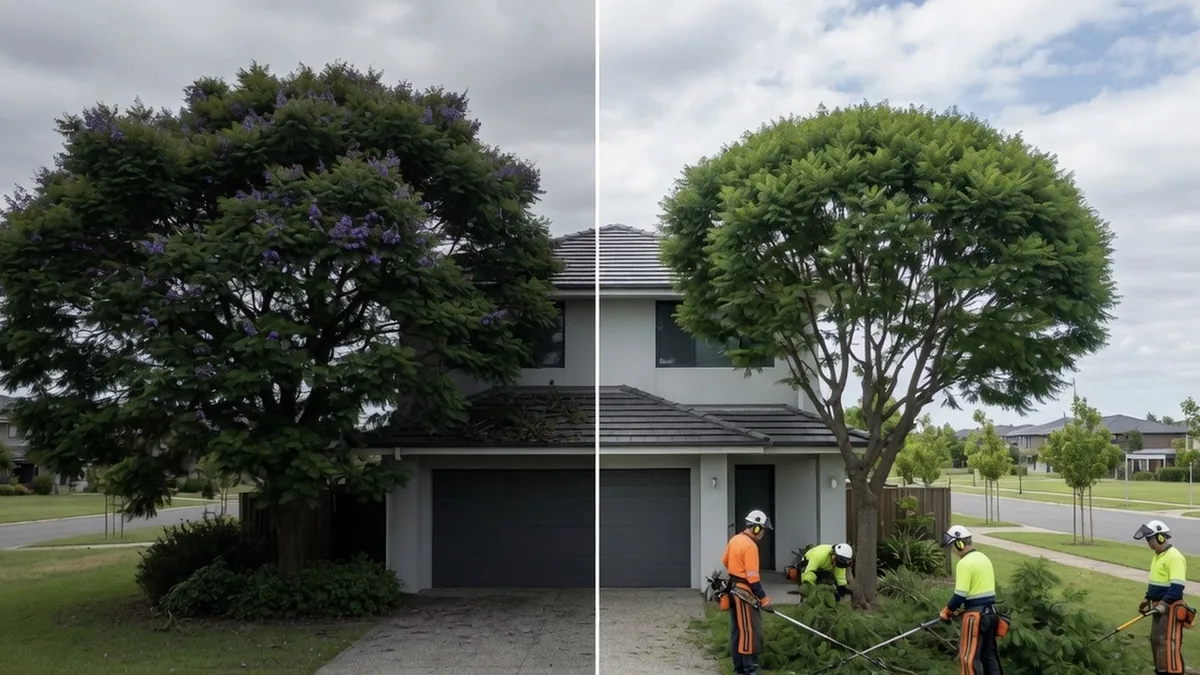
Structural pruning and crown maintenance for street trees, boundary trees and established grey box and forest red gum on older Macarthur blocks.
Learn more →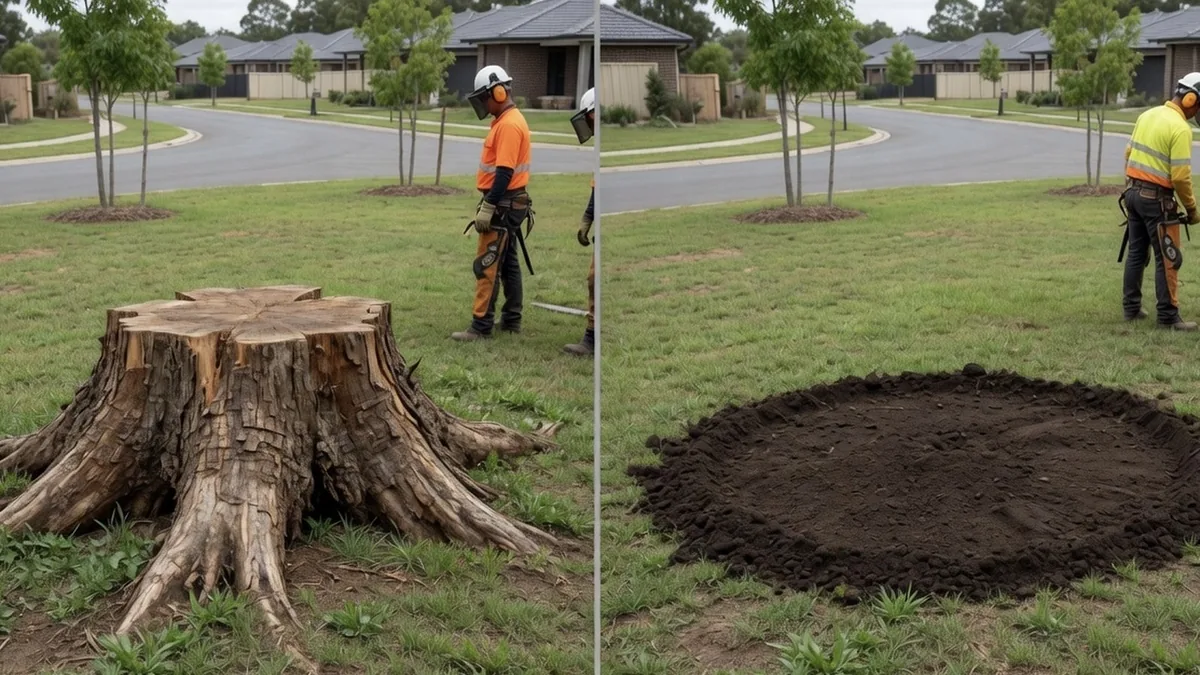
Mechanical stump grinding below ground level, clearing the way for landscaping, driveways or new turf on both established and newly built blocks.
Learn more →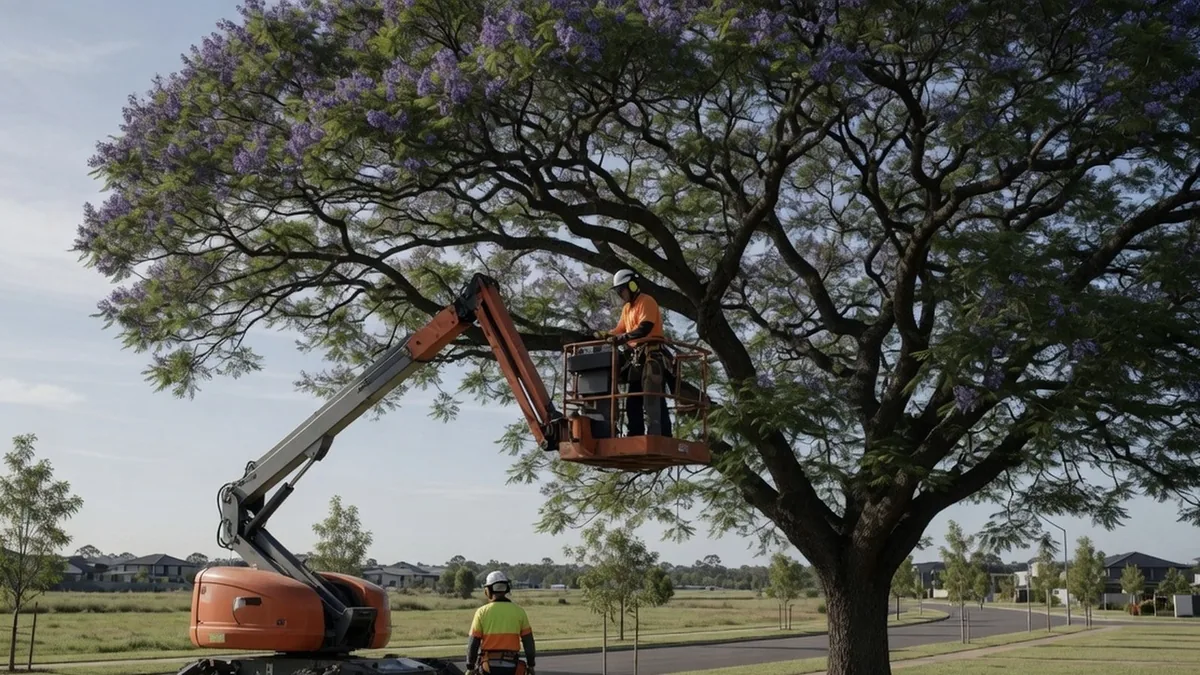
Specialist take-down of tall or overgrown palms from suburban backyards and street frontages across the region.
Learn more →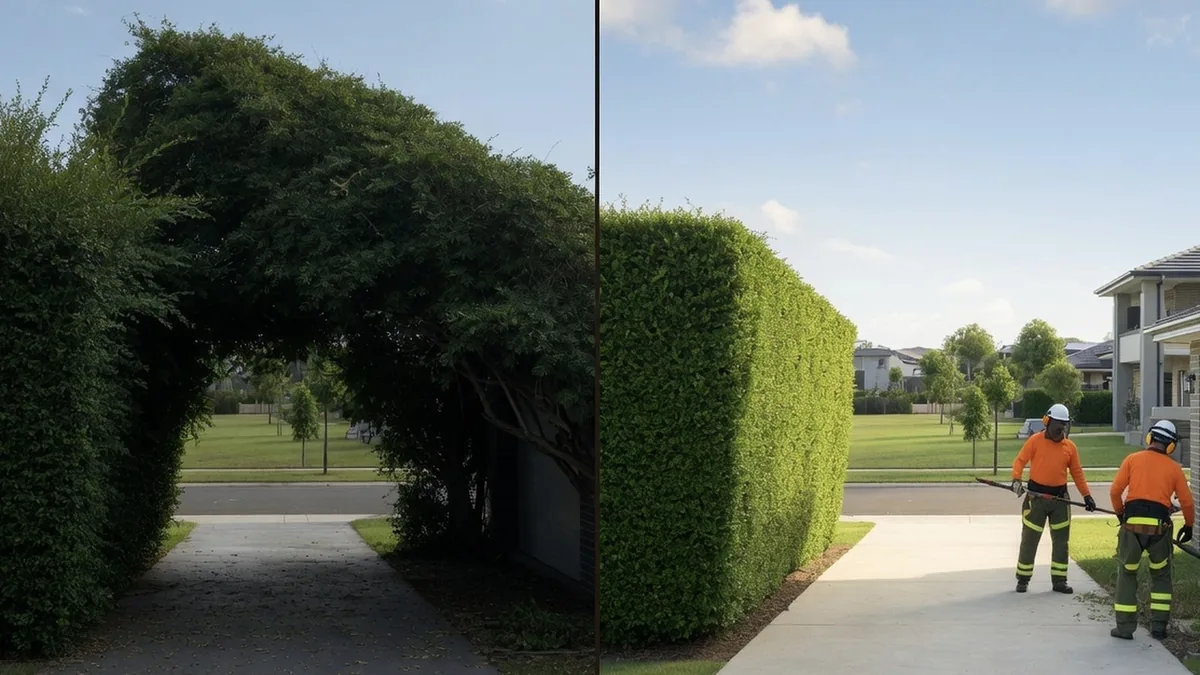
Neat, regular trimming of boundary hedges and screening plants for homes and bodies corporate in newer estates.
Learn more →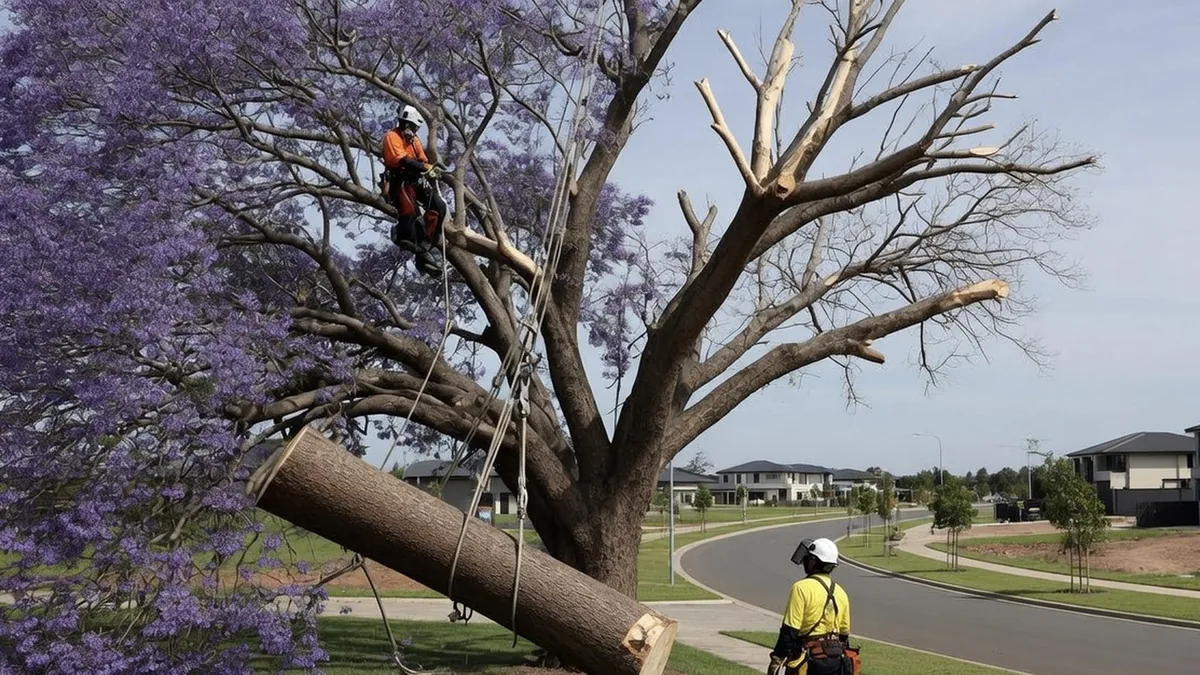
Fast response for fallen limbs and storm-damaged ironbark and eucalypt trees threatening homes, fences and cars.
Learn more →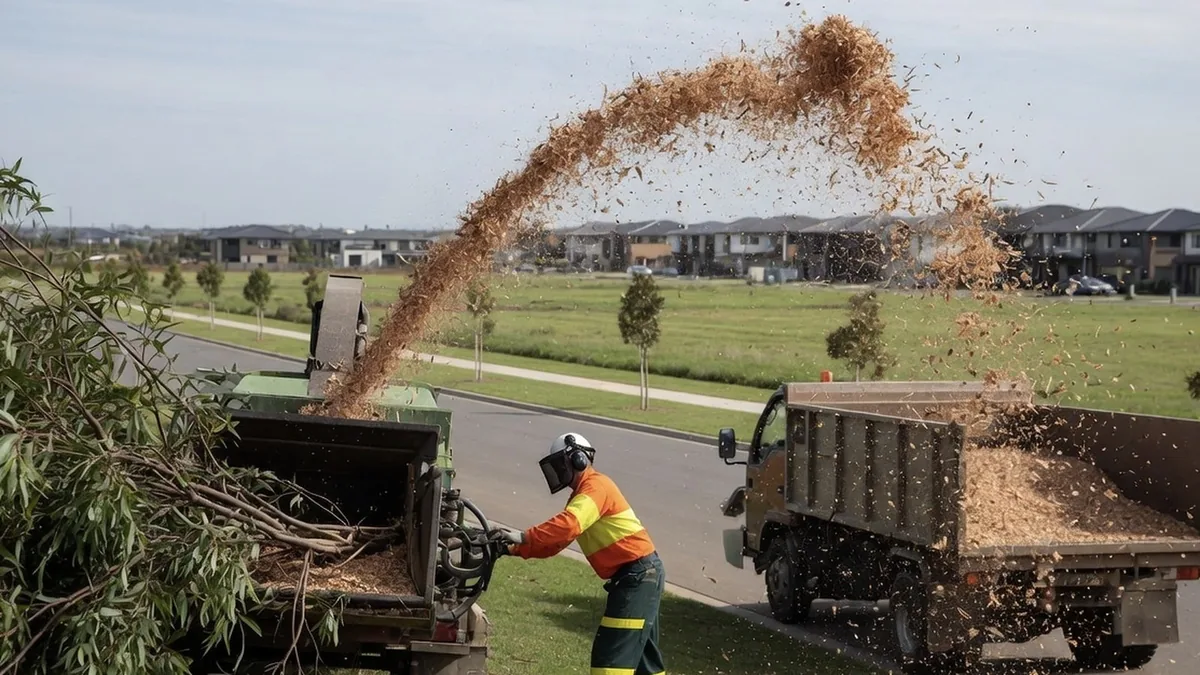
On-site chipping of cleared vegetation into mulch, with full green waste removal so blocks are left tidy for handover or resale.
Learn more →In most cases you need approval before you touch it. Campbelltown City Council manages vegetation through the Campbelltown (Sustainable City) Development Control Plan 2015, Part 11 — Vegetation and Wildlife Management. The DCP defines a tree broadly as a perennial plant with at least one self-supporting stem that is more than 3 metres tall, or has an outside circumference of at least 500mm at ground level, or a branch and foliage crown spread of at least 4 metres. Most established backyard trees in Campbelltown, Ingleburn or Minto clear at least one of those. Council also runs separate application pathways for pruning and for trees assessed as dead, dying or dangerous. Rules and fees change, so confirm your specific tree with Council on (02) 4645 4000 before booking any work.
No, and you should be wary of anyone who says otherwise. Nobody outside Campbelltown City Council decides a Campbelltown tree application. What we can do is connect you with someone who prepares written tree assessments and arborist reports to support your application, and help you gather the site plan, photographs and owner's consent Council typically asks for. If the report finds the tree is healthy and safely retainable, it will say so — an honest report is worth far more to your application than an optimistic one.
Street and verge trees in the Campbelltown local government area are public assets managed by Council, not by the adjoining property owner, and you should not prune or remove one yourself. If a Council street tree is dropping limbs, lifting your driveway or fouling your roof, lodge a request with Campbelltown City Council and let their crews assess it. We work on privately owned trees. If you are unsure where the boundary actually falls — common on the older Leumeah and Bradbury blocks where the verge is wide — check your title before assuming.